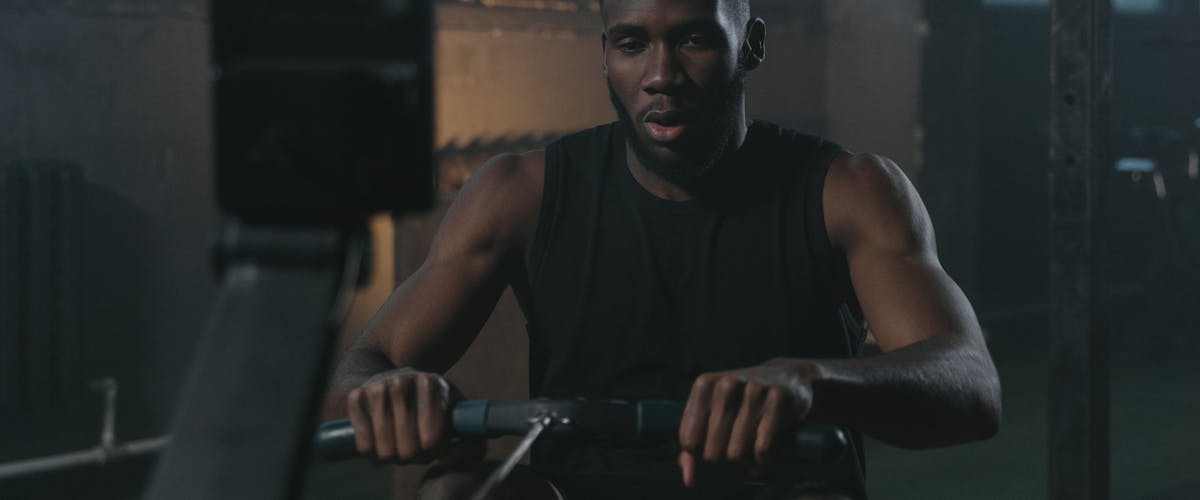
The best rowing machine for beginners is the Concept2 RowErg (~$990) — it is used in Olympic training centers worldwide, costs under $1,000, and its self-regulating air resistance naturally teaches correct form without requiring a subscription or connected app. For beginners who need guided workouts and ongoing motivation, the Aviron Strong Go Rower (~$1,299) offers 5,000+ workouts and gamified features that keep first-timers coming back. For apartment dwellers or budget-focused buyers, the ProForm 750R (~$799) folds nearly flat, runs near-silently, and includes iFIT interactive training.
Most "best rowing machine" guides treat beginners as one of twelve user types. This guide covers only the beginner use case — because what matters to a first-time rower is genuinely different from what an experienced competitor needs. The IronSetLab team evaluated machines specifically for setup ease, technique feedback, guided-workout availability, and realistic total cost of ownership for someone buying their very first rower.
If you have already rowed regularly and are upgrading, this is not the guide for you. For a comprehensive look at all resistance types and performance metrics, see the full IronSetLab rowing machine roundup. This guide focuses on the five machines that give a first-time buyer the best chance of sticking with the habit.
What Beginners Need in a Rowing Machine (That Experienced Rowers Don't)
An experienced rower buying a home machine already knows proper stroke mechanics, knows which resistance type feels natural to them, and has a training plan in mind. A beginner has none of these things. The gap between what these two buyers need is larger than most buying guides acknowledge.
Technique Feedback
Poor rowing form is the primary cause of rowing-related back injuries, particularly lower lumbar strain from over-reaching at the catch or jerking with the arms before the legs have driven through. Beginners need a machine that provides clear feedback — either physical or visual — about stroke quality.
Air resistance machines like the Concept2 RowErg provide immediate tactile feedback: the resistance ramps up proportionally to how hard and smoothly you pull, so a sloppy, arm-dominant stroke feels distinctly different from a clean, leg-driven one. Smart rowers with screens — the Hydrow Wave and Aviron Strong Go — use on-screen instructor cueing and, in Hydrow's case, real-time HydroMetrics coaching that shows stroke rate, drive time, and catch angle on a per-stroke basis.
Ease of Getting Started
Assembly complexity matters more than most beginners expect. The Concept2 RowErg assembles in under 5 minutes — the monorail clicks together and the footrests are pre-configured. The Hydrow Wave requires a full 30-minute setup and benefits from professional delivery (available at extra cost). The ProForm 750R and Aviron Strong Go fall in the middle at 20–30 minutes each.
Seat height is a frequently overlooked factor. Lower seats (the WaterRower is 9 inches from the ground; Ergatta is 11 inches) are harder to mount and dismount for those with limited hip flexibility or knee issues — common in first-time exercisers. The Concept2 RowErg standard legs sit at 14 inches; tall-leg kits raise it to 20 inches and are recommended for anyone over 6 feet tall or with limited hip mobility.
Content and Guided Workouts
Research consistently shows that beginners who have access to guided workouts maintain exercise habits at higher rates than those using equipment without instruction. The trade-off is subscription cost: smart rowers from Aviron, Hydrow, and ProForm add $29–$50 per month to the total cost of ownership.
Pure performance rowers like the Concept2 ship without any on-demand content. The PM5 monitor displays pace, watts, calories, and stroke rate — but there is no instructor, no class, and no guided warm-up. For self-directed, internally motivated beginners, this is fine. For the majority of first-time home exercisers, the absence of structure is a retention risk.
Budget Reality for First-Time Buyers
Beginners often underestimate true cost of ownership:
- Budget tier (<$500): Magnetic rowers like the Sunny Health SF-RW5515 (~$249) are adequate for basic cardio but provide limited technique feedback and no guided content. Best as a low-risk entry point.
- Mid-range ($700–$1,100): The ProForm 750R (~$799) and Concept2 RowErg (~$990) represent the best value for most beginners. The ProForm adds iFIT content; the Concept2 relies on external free resources (Concept2 YouTube, row2k).
- Premium ($1,200+): Aviron Strong Go (~$1,299) and Hydrow Wave (~$1,995) justify the cost if guided workouts are non-negotiable. Monthly subscriptions of $29–$50 add $348–$600 per year to operating cost.
Types of Rowing Machines — Which Is Best for Beginners?
There are four main resistance types. Each has meaningful trade-offs that matter differently depending on where you live, how you learn, and how self-motivated you are.
Air Resistance — Best for Learning Technique
Air resistance machines use a flywheel with fan blades. The faster and harder you pull, the more air resistance the flywheel creates. This self-regulating characteristic is the key beginner advantage: the machine naturally rewards good technique with smooth, powerful strokes and makes sloppy technique immediately apparent through inconsistent resistance.
Best option: Concept2 RowErg. The dominant disadvantage is noise — the fan flywheel produces a whooshing sound (roughly 50–60 dB) that may not be suitable for apartments with thin walls or early-morning workouts.
Beginner verdict: Best for learning proper technique. Not ideal for apartments or noise-sensitive environments.
Water Resistance — Authentic Feel, Higher Barrier
Water resistance machines (WaterRower, Ergatta) use a water-filled tank. The resistance closely mimics actual on-water rowing, and the visual and auditory feedback of water moving is a strong motivator for some users.
The limitations for beginners include: lower seat heights that make mounting and dismounting awkward, the need to periodically maintain water levels and add purification tablets, and higher prices (Ergatta starts at ~$2,499). These are not insurmountable issues, but they add friction that beginners rarely need.
Beginner verdict: Good for those motivated by authentic feel. Not ideal for beginners with mobility concerns or tight budgets.
Magnetic Resistance — Best for Apartments
Magnetic resistance machines use a magnetic brake system against a flywheel to create resistance. They are nearly silent (some produce less noise than a whispering conversation) and maintenance-free. The resistance feel is adjustable in pre-set levels rather than self-regulating, which means a beginner needs to manually select appropriate levels as fitness improves.
The ProForm 750R runs 24 resistance levels. The Aviron Strong Go uses electromagnetic resistance with essentially infinite adjustment. Many magnetic rowers also pair with connected apps (iFIT, Aviron) that handle resistance adjustment automatically during instructor-led workouts.
Beginner verdict: Best for apartment beginners or those prioritizing quiet operation.
Smart/Connected Rowers — Best for Motivation
Smart rowers combine magnetic or electromagnetic resistance with large touchscreens and instructor-led content libraries. The Aviron Strong Go (22-inch screen, 5,000+ workouts including games), Hydrow Wave (16-inch screen, on-water instructor classes), and ProForm 750R (iFIT-connected, no built-in screen — uses your own device) are the leading options for beginners who benefit from external structure.
The Hydrow platform is particularly noteworthy for beginners: instructors row on actual water while coaching, the HydroMetrics feature tracks stroke-by-stroke form data, and the content library includes dedicated beginner programs. The trade-off is the $50/month subscription and $1,995 entry price.
Beginner verdict: Best for those who need external motivation and form coaching to build a consistent habit.
The 5 Best Rowing Machines for Beginners — Reviewed
The IronSetLab team evaluated each machine on five beginner-specific criteria: assembly ease, technique feedback, content availability, noise level, and total cost over 12 months including any subscription. Prices reflect March 2026 market rates.
| Machine | Price | Resistance | Screen | Weight Cap. | Subscription | Folds? |
|---|---|---|---|---|---|---|
| Concept2 RowErg | ~$990 | Air | PM5 Monitor | 500 lbs | None required | Yes (upright) |
| Aviron Strong Go Rower | ~$1,299 | Electromagnetic | 22" Touchscreen | 507 lbs | $29/mo | No |
| Hydrow Wave | ~$1,995 | Electromagnetic | 16" Touchscreen | 375 lbs | $50/mo | Yes (w/ anchor kit) |
| ProForm 750R | ~$799 | Magnetic | Tablet holder (no built-in) | 250 lbs | $15/mo (iFIT) | Yes (flat) |
| Sunny Health SF-RW5515 | ~$249 | Magnetic | LCD only | 250 lbs | None | Yes (upright) |
Best Overall for Beginners — Concept2 RowErg (~$990)
The Concept2 RowErg is the global standard for indoor rowing. It is found in commercial gyms, university boathouses, Olympic training centers, and physical therapy clinics worldwide — and for good reason. No other machine in this price range combines the build quality, performance accuracy, and technique-building characteristics of the RowErg.
For beginners specifically, the air-resistance flywheel provides the most honest form feedback available on a home machine. When a beginner pulls unevenly or arm-pulls before the legs are done driving, the resistance curve feels noticeably different than a clean stroke. After two to four weeks, this tactile feedback trains the correct neuromuscular sequence without any screen or coach required.
Key specs: Air resistance, PM5 monitor (shows pace per 500m, watts, stroke rate, calories), 500-lb weight capacity, 96"L × 24"W footprint, stores upright at 25" × 33", 57 lbs, standard legs seat height 14", tall-leg option available. Ships in two boxes; most beginners assemble it in under 10 minutes.
Who it's for: Self-motivated beginners who will use YouTube or Concept2's free workout resources. Anyone planning to row long-term — the RowErg retains resale value exceptionally well (~$600–$700 used after years of use). Those with space constraints who need a machine that stores vertically.
Who it's NOT for: Beginners who need structured guidance to stay motivated — the Concept2 has no screen, no content library, and no gamification. Also not ideal for those with weight capacity needs above 250 lbs on a magnetic machine (though the Concept2's 500-lb capacity makes it inclusive for virtually all body types).
Check Concept2 RowErg Price on Amazon →Best for Motivated Beginners — Aviron Strong Go Rower (~$1,299)
The Aviron Strong Go is the best rowing machine for beginners who have previously quit exercise routines. Its platform includes 5,000+ workouts, competitive races, arcade-style games (dodging obstacles while rowing), and live leaderboards — all designed around the insight that external competition and novelty are powerful retention tools.
PCMag and Garage Gym Reviews both highlight the Strong Go as one of the top interactive rowers for beginners, noting that the gamification layer genuinely changes the experience from "exercise I'm forcing myself to do" to "the thing I want to do when I have 30 minutes." Testing revealed that the 22-inch touchscreen is clear and responsive, the electromagnetic resistance is nearly silent, and the 507-lb weight capacity is the highest in this roundup.
Key specs: Electromagnetic (magnetic) resistance, 22" touchscreen, 5,000+ workouts, arcade games, 507-lb capacity, 84"L × 27"W × 48"H (notably compact for a rower with a screen), 114 lbs. Subscription: $29/month for unlimited family profiles.
Who it's for: Beginners who need variety and motivation to stick with exercise. Those who enjoy games and competition. Households where multiple family members will share the machine (the family membership covers all profiles).
Note on pricing: The Aviron Strong Go launched at $1,599 but has been available as low as $1,299 through direct promotions. The Strong (with built-in screen, $2,499) is the fully featured model; the Strong Go uses an iPad or tablet for its display, which reduces the upfront cost significantly.
Check Aviron Strong Go Price on Amazon →Best Smart Rower for Beginners — Hydrow Wave (~$1,995)
The Hydrow Wave is the best choice for beginners who prioritize form coaching and instructor-led structure above all else. Hydrow's platform is built around athlete-rowers coaching from actual waterways — the visual and audio immersion is genuinely different from any other connected fitness product, and the HydroMetrics feature provides real-time per-stroke feedback that few beginners get outside of a coached environment.
The Wave is the compact version of the Hydrow lineup at 86"L × 25"W, weighing 102 lbs — light enough for most adults to move without assistance. The 16-inch touchscreen runs Hydrow's content library of 5,000+ classes including rowing-specific beginner programs, yoga, strength, and meditation. The electromagnetic resistance is essentially silent.
Key specs: Electromagnetic resistance, 16" HD touchscreen, 375-lb capacity, folds upright with optional anchor kit ($199), 86"L × 25"W, available in five colors. Hydrow membership: $50/month ($600/year).
Who it's for: Beginners who want the closest equivalent to a coached gym rowing class at home. Those who find the Concept2's lack of content demotivating but want a premium feel rather than Aviron's game-centric approach. Buyers considering a premium smart rower should also read the IronSetLab Hydrow vs. Ergatta comparison before deciding.
Total cost consideration: At $1,995 upfront plus $600/year in subscription, the 3-year total cost of the Hydrow Wave reaches approximately $3,795. Compare this against the Concept2 RowErg at ~$990 with zero ongoing subscription cost — the price gap funds nearly three years of RowErg ownership.
Check Hydrow Wave Price on Amazon →Best Apartment Rower for Beginners — ProForm 750R (~$799)
The ProForm 750R earns its place as the top apartment rower for beginners by combining four features that matter in dense living situations: near-silent magnetic resistance, a fold-flat design, iFIT interactive training content, and a price under $800. Garage Gym Reviews' testing confirmed the 750R as a solid value at around $800, praising its smart features and folding design.
The iFIT integration is the key differentiator from a basic magnetic rower. iFIT trainers lead workouts filmed on actual waterways around the world, and the app can automatically adjust the ProForm's resistance levels during classes — the "AutoAdjust" feature means a beginner doesn't need to know what resistance level to set; the instructor's workout prescription handles it automatically. This removes a significant cognitive friction point for first-timers.
Key specs: 24 levels of magnetic resistance (with AutoAdjust via iFIT), folds flat (26" folded length), tablet holder (no built-in screen — use your own phone or tablet for iFIT), 250-lb weight capacity, 24 built-in workout programs available without subscription. iFIT subscription: $15/month (or $180/year).
Who it's for: Apartment dwellers or those in shared living situations where noise matters. Beginners who want interactive workouts at the lowest total cost — the ProForm 750R with iFIT is the most affordable path to on-demand coached rowing. Those with space constraints who need the rower to disappear between sessions.
Limitation: The 250-lb weight capacity is the lowest in this roundup and may exclude some users. The absence of a built-in screen means you need a compatible device to access iFIT content; the 24 pre-programmed workouts accessible without a device are limited compared to full iFIT.
Check ProForm 750R Price on Amazon →Best Budget Rower for Beginners — Sunny Health & Fitness SF-RW5515 (~$249)
The Sunny Health & Fitness SF-RW5515 is the lowest-risk entry point for a beginner who is genuinely uncertain whether rowing will stick as a habit. At approximately $249, it costs a fraction of any other machine on this list and delivers the core function of rowing: a low-impact, full-body cardio workout with adjustable resistance.
The SF-RW5515 uses 8-level magnetic resistance with a basic LCD monitor tracking time, count, calories, and total count. The monorail is 53.4 inches — slightly shorter than premium models — which may limit stroke length for users over 6'2". It folds upright for storage. The SunnyFit app provides some free workout content, though the experience is not comparable to iFIT or the Aviron platform.
Key specs: 8 levels of magnetic resistance, 250-lb capacity, LCD display (time, count, calories, total count), 53.4" slide rail, folds upright, ~44 lbs. Free SunnyFit app included.
Who it's for: Absolute beginners with a tight budget. Those wanting to test rowing as a workout modality before committing $800+. Supplementary cardio for home gyms that already have a primary machine.
Honest limitation: The SF-RW5515 is a starter machine. If rowing becomes a consistent habit — and statistics suggest it will if you row three or more times per week for the first month — you will outgrow this machine within 6–12 months and want to upgrade. Consider the entry price as the cost of a 6-month trial rather than a long-term investment.
Check Sunny Health SF-RW5515 Price on Amazon →Beginner Rowing Technique — The 4 Phases of a Correct Stroke
This section exists for one reason: back injuries from rowing are preventable, and they almost universally stem from poor form learned in the first weeks of use. Understanding the four-phase stroke sequence before sitting on any machine reduces injury risk and makes every subsequent workout more effective.
The correct sequence is often summarized as: legs → body → arms on the drive (power phase), and arms → body → legs on the recovery. The most common beginner error — arms before legs on the drive — is covered in detail below.
Phase 1: The Catch
The catch is the starting position. Correct catch position: shins vertical (not angled forward), arms straight with hands gripping the handle, torso leaning slightly forward (about 1 o'clock position when viewed from the side), and core engaged. The most common beginner error at the catch is over-reaching by sliding too far forward on the monorail, which causes the shins to angle past vertical and puts the lower back in a compromised position before the drive begins.
Cue to use: "Shins vertical, arms long" — before every single stroke until the position becomes automatic.
Phase 2: The Drive
The drive is the power-generating phase. The correct sequence is: legs push first (extend the knees while keeping the torso angle constant), then hinge the hips back to approximately 11 o'clock, then pull the arms toward the lower chest or upper abdomen. This sequence ensures the largest muscle groups (quads, hamstrings, glutes) generate most of the power before the smaller back and arm muscles contribute.
The most destructive beginner mistake happens here: pulling with the arms while the legs are still driving. This creates a "shooting the slide" error where the body hinges too early, straining the lower back and losing significant power. If you feel back fatigue after rowing, this is almost always the cause.
Cue to use: "Push the floor away" — focusing attention on the feet pressing down rather than the hands pulling back naturally sequences the legs first.
Phase 3: The Finish
The finish is the end position of the drive. At the finish: legs are fully extended (but not locked — a slight bend is fine), torso is leaning back slightly (approximately 11 o'clock), elbows are past the body with the handle drawn to the lower chest or upper abdomen, and wrists are flat. Common errors include leaning back too far (beyond 10 o'clock) or drawing the handle up toward the chin, both of which create neck and shoulder strain.
Phase 4: The Recovery
The recovery is the rest phase — returning to the catch position. The recovery sequence is the exact reverse of the drive: arms extend first (straighten elbows, push handle away), then body leans forward to approximately 1 o'clock, then legs bend as the seat slides back to the catch position. The recovery should take roughly twice as long as the drive — this is not rushing time; it is the interval where the aerobic system recovers between strokes.
Key principle: A stroke rate (measured in strokes per minute, visible on all monitors) of 18–22 is appropriate for beginners. Higher rates are not better — power per stroke matters more than speed.
- Chicken-winging: Elbows flaring out during the pull. Keep elbows close to the body and draw them past the ribs.
- Overreaching: Leaning too far forward at the catch, stressing the lower back before the drive begins.
- Rushing the recovery: Sliding back to the catch immediately after the finish, removing the recovery interval and increasing fatigue.
- Back as the primary mover: If the lower back feels worked during and after rowing, the drive sequence is reversed — legs are not initiating the power phase.
How to Structure a Beginner Rowing Workout
A common mistake among beginners is either rowing too hard too soon (leading to soreness and discouragement) or rowing without any structure (leading to boredom and dropout). The following 4-week plan is designed for someone with no prior rowing experience, using any machine from this guide.
| Week | Sessions/Week | Duration | Intensity | Primary Focus |
|---|---|---|---|---|
| Week 1 | 3 | 10–15 min | Low (18–20 spm) | Stroke sequence — legs, body, arms |
| Week 2 | 3–4 | 15–20 min | Low-moderate (20–22 spm) | Consistency of catch position |
| Week 3 | 4 | 20–25 min | Moderate (22–24 spm) | Tracking pace per 500m; building endurance |
| Week 4 | 4–5 | 25–30 min | Moderate + 1 interval session | First intervals: 5×2 min hard / 1 min easy |
Pacing reference: On the Concept2 PM5 monitor, a beginner target pace of 2:30–2:45 per 500 meters at steady-state effort is a reasonable starting point for most adults. Competitive recreational rowers typically aim for 2:00–2:10; this context helps beginners calibrate expectations.
Rest days matter: Rowing engages the full posterior chain (glutes, hamstrings, lower and mid-back), muscles that most beginners are not accustomed to using intensively. Building in at least 2 rest days per week during the first month reduces injury risk and accelerates adaptation.
Rowing Machine Buying Checklist for Beginners
Use this summary checklist before making a final purchasing decision. It is designed to help beginners identify which features are non-negotiable for their specific situation versus which are nice-to-have.
| Criteria | Concept2 RowErg | Aviron Strong Go | Hydrow Wave | ProForm 750R | Sunny SF-RW5515 |
|---|---|---|---|---|---|
| Price | ~$990 | ~$1,299 | ~$1,995 | ~$799 | ~$249 |
| Resistance Type | Air | Electromagnetic | Electromagnetic | Magnetic | Magnetic |
| Subscription Needed? | No | $29/mo | $50/mo | $15/mo | No |
| Folds? | Yes (upright) | No | Yes (w/ kit) | Yes (flat) | Yes (upright) |
| Max Weight | 500 lbs | 507 lbs | 375 lbs | 250 lbs | 250 lbs |
| Apartment-Friendly? | No (loud fan) | Yes (quiet) | Yes (quiet) | Yes (quiet) | Yes (quiet) |
| Guided Workouts? | No built-in | Yes (5,000+) | Yes (5,000+) | Yes (iFIT) | Basic (SunnyFit) |
| Frame Warranty | 5 years | 5 years | 5 years | 5 years | 3 years |
| 12-Month Total Cost | ~$990 | ~$1,647 | ~$2,595 | ~$979 | ~$249 |
FAQs — Best Rowing Machine for Beginners
What is the best rowing machine for a beginner?
The Concept2 RowErg (~$990) is the best rowing machine for beginners overall because its air resistance self-regulates to your effort level, naturally teaching correct form without requiring a subscription. For beginners who need guided workouts to stay motivated, the Aviron Strong Go Rower (~$1,299) or ProForm 750R (~$799) offer interactive content at more accessible price points.
Is a rowing machine good for beginners?
Yes — rowing is one of the best cardio options for beginners. It works approximately 86% of the body's muscles, burns 400–800 calories per hour depending on intensity, and is low-impact on joints. The main caveat is that rowing form matters more than most cardio exercises; poor technique — especially excessive back rounding — can lead to lower back strain. A good beginner rower with guided workouts addresses this from session one.
How long should a beginner row?
Beginners should start with 10–15 minutes per session, 3–4 times per week for the first two weeks, focusing entirely on technique rather than intensity. By weeks 3–4, building to 20–25 minutes at moderate intensity becomes appropriate. By the end of the first month, 30-minute sessions are a realistic and sustainable target. The 4-week plan above provides a specific daily structure.
Is rowing hard to learn?
The basic rowing stroke can be learned in 1–2 sessions. The four-phase sequence — catch, drive, finish, recovery — is intuitive once practiced slowly at low resistance. Perfecting the form so it becomes automatic takes 2–4 weeks of consistent practice. The most common beginner mistake is pulling with the arms before the legs have completed their drive, which creates inefficiency and lower back strain. Smart rowers with on-screen coaching (Hydrow, Aviron) accelerate the learning curve significantly.
What resistance type of rowing machine is best for beginners?
Air resistance (as used by the Concept2 RowErg) is best for learning proper rowing technique because the resistance automatically increases the harder you pull, mimicking real water rowing and providing immediate tactile feedback on stroke quality. Magnetic resistance is the best choice for beginners in apartments or shared living spaces where noise is a constraint — machines like the ProForm 750R operate near-silently while still offering connected workout content.
Bottom Line: Which Beginner Rowing Machine Should You Buy?
For most beginners, the Concept2 RowErg (~$990) is the right machine. It builds proper technique through air resistance feedback, requires no monthly subscription, folds upright for storage, and will last decades. The investment is justified even if rowing becomes a lifelong habit — the machine's resale value remains strong after years of use.
For beginners who need external motivation — those who have previously bought exercise equipment and stopped using it — the Aviron Strong Go (~$1,299) changes the retention equation through gamification and competition. The $29/month subscription is a reasonable cost if it means the machine actually gets used.
For apartment beginners or those on a budget, the ProForm 750R (~$799) is the strongest value option: silent operation, folds flat, and iFIT interactive coaching for $15/month makes the 12-month total cost nearly identical to the Concept2 while offering more guided structure.
If the question is purely "will I stick with rowing?" and the budget is limited, start with the Sunny Health SF-RW5515 (~$249) and upgrade in 6–12 months once the habit is proven.
Sources: Concept2 RowErg product page, Garage Gym Reviews — ProForm 750R, Hydrow Wave product page, PCMag — Aviron Strong Go review. Prices reflect March 2026 market rates and are subject to change.