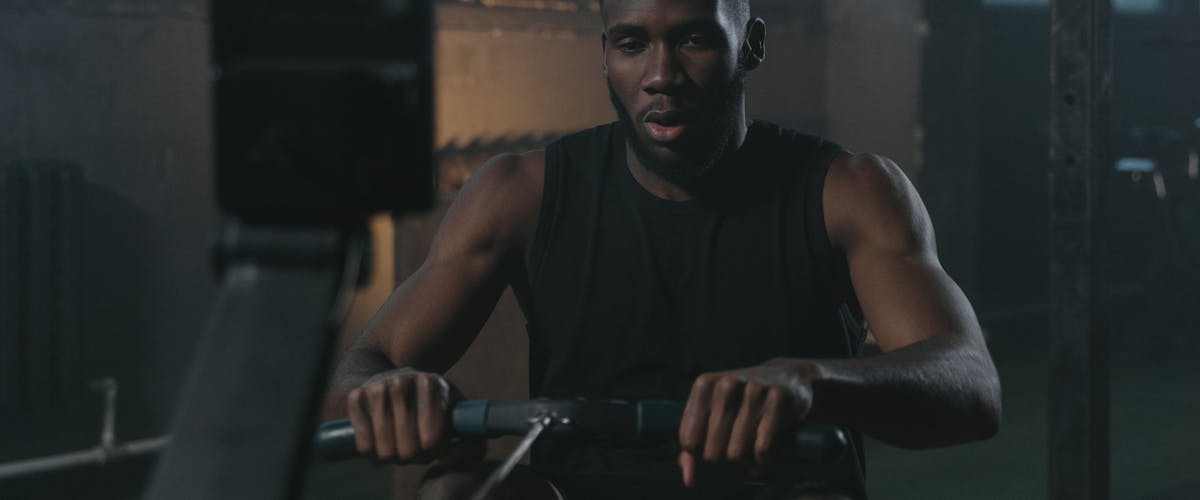
For most people who commit to 3+ weekly sessions, a rowing machine is worth the investment — the Concept2 RowErg pays for itself versus a gym membership in roughly 18–24 months, and its exceptional resale value makes the net cost even lower over time. For apartment dwellers or those on tighter budgets, a magnetic rowing machine under $300 provides a nearly silent, compact, full-body alternative.
Two concerns drive most of the hesitation around buying a home rower: cost and space. Quality rowers run $249 to $2,295 upfront, and full-length machines occupy a footprint comparable to a single bed — about 8 feet long when in use. Those concerns are real. But so is the case against continued gym membership spending: the average American pays $40–$60 per month for a gym, adding up to $1,440–$2,160 over three years for access to equipment that's often crowded, and a commute that makes skipping sessions too easy.
This guide covers the actual financial math, the workout benefits that distinguish rowing from other home cardio, the real space requirements, and the specific buyer profiles for which a rowing machine makes — or doesn't make — sense. The goal is an honest answer, not a sales pitch.
The Short Answer: Is a Rowing Machine Worth It?
The verdict depends on usage commitment and living situation. Here is the direct breakdown:
| Profile | Verdict | Reasoning |
|---|---|---|
| 3+ sessions per week, house or garage | ✓ Worth It | Concept2 pays for itself vs. gym in 18–24 months; low maintenance costs |
| 3+ sessions per week, apartment | ✓ Worth It (with caveats) | Choose a magnetic rower for near-silent operation; add a foam mat |
| 1–2 sessions per week, irregular schedule | ⚠ Consider First | Break-even extends to 3+ years; a budget rower reduces financial risk |
| Prefers group fitness / social environment | ✗ Skip It | Gym membership provides motivation and variety a home rower cannot replicate |
| Never used a rower before | ⚠ Start Budget | Try a sub-$300 magnetic rower first before investing $900+ |
| Recovering from knee, hip, or back injury | ✓ Strong Option | Zero foot-strike impact; seated position reduces joint load (consult physician) |
The Financial Math — Does a Rowing Machine Pay for Itself?
The economics of home exercise equipment come down to total cost of ownership versus the alternative. For most buyers, that alternative is a gym membership. Here is the actual math.
Gym Membership vs. Rowing Machine Ownership
The average gym membership in the United States costs $40–$60 per month, according to data compiled across major chains. At $50/month, that is $600 per year and $1,800 over three years — and that figure excludes initiation fees, which commonly run $50–$100.
The Concept2 RowErg, the most widely recommended home rower, is priced at approximately $990 with $55 shipping (to the contiguous US). No subscription is required. Over three years, the total cost of RowErg ownership is approximately $1,040 — including a nominal $10/year for chain oil maintenance — while the gym membership accrues to $1,800+. The break-even point arrives around month 18 to 24.
Connected rowers alter the math significantly. The Hydrow Wave ($1,995) plus a $50/month subscription totals $2,595 in the first year alone — well above any gym membership cost. The financial case for connected rowers rests not on cost savings but on the argument that guided content increases session frequency enough to justify the premium.
Resale Value Is Exceptional
One factor that competitors to the rowing machine category rarely match: the Concept2 RowErg holds its resale value unusually well. Used RowErgs in good condition typically sell on Craigslist and Facebook Marketplace for $650–$800 — roughly 70–80% of purchase price even after several years of regular use. This is a function of demand: Concept2 machines are used at CrossFit affiliates, HYROX competitions, and collegiate rowing programs worldwide, so the secondary market is deep.
What this means financially: purchasing a Concept2 RowErg for $990, using it for three years, and selling it for $700 results in a net cost of approximately $290 for three years of unlimited workouts — equivalent to roughly five months of gym membership. That is the most favorable home cardio equipment ROI calculation in the IronSetLab team's analysis of the category.
Connected rowers (Hydrow, NordicTrack RW900) do not hold resale value as well. Their value is partly subscription-dependent, and used buyers are often reluctant to inherit equipment tied to ongoing costs.
Maintenance Costs Are Minimal
The Concept2 RowErg requires chain lubrication approximately once per year ($10 for a bottle of Concept2 chain oil) and seat wheel replacement every 3–5 years ($20–$30 for parts). Total annual maintenance cost: under $15. The monorail and frame are designed to last 15–20+ years under regular home use — and Concept2 sells replacement parts indefinitely, unlike most fitness brands.
Magnetic and electromagnetic rowers (Hydrow, Fitness Reality) have no chain and no consumable wear components. The primary long-term cost risk is the electronic control board and screen — components that are harder and more expensive to replace if they fail outside the warranty period.
What Makes Rowing Machine Workouts Different From Other Home Cardio?
Most home cardio equipment works one region of the body. Rowing is the exception — and that distinction has measurable fitness implications.
The Full-Body Efficiency Advantage
According to the American Fitness Professionals Association (AFPA), a single rowing stroke engages approximately 85–86% of the body's major muscle groups. The drive phase — pushing with the legs — accounts for 65–75% of propulsive force, recruiting the quadriceps, hamstrings, and glutes. The finish phase engages the latissimus dorsi, rhomboids, biceps, and core stabilizers. Every stroke is a compound movement integrating lower body power, upper body strength, and core stability.
Compare this to other common home cardio options:
| Machine | Primary Muscle Groups | Upper Body Engagement | Core Engagement |
|---|---|---|---|
| Rowing Machine | Legs, back, arms, core | High (25–35%) | High (constant stabilization) |
| Treadmill / Running | Legs, glutes | Minimal | Moderate |
| Stationary Bike | Legs, glutes | None | Low |
| Elliptical | Legs, glutes | Moderate (handle-dependent) | Low-Moderate |
The practical implication: 20–25 minutes of rowing can replace a separate cardio session and a light upper-body strength session. For people managing limited workout time, this efficiency is genuinely valuable.
Low Impact, High Calorie Burn
Rowing produces zero foot-strike impact. Unlike running — where each stride transmits 2–3 times body weight through the ankle, knee, and hip joints — rowing is entirely seated and supported. The feet press against fixed pads; there is no jumping, landing, or high-velocity joint loading at any point in the stroke.
Despite this, the calorie burn is competitive with impact-based cardio. A 175-pound person burns approximately:
- Running (moderate pace): ~350 calories per 30 minutes
- Rowing (moderate intensity): ~300–316 calories per 30 minutes
- Cycling (moderate pace): ~260 calories per 30 minutes
- Elliptical (moderate resistance): ~310–320 calories per 30 minutes
Rowing's low-impact, high-calorie profile makes it particularly valuable for people managing knee osteoarthritis, hip replacement recovery, or chronic lower back issues — populations for whom running is contraindicated but cardiovascular fitness remains important. As always, medical clearance before beginning any new exercise program is recommended.
The Technique Learning Curve
The one legitimate drawback of rowing as a home exercise: form takes time to learn. Unlike a treadmill (walk or run — the motion is intuitive) or a stationary bike (pedal forward — equally intuitive), rowing involves a sequenced, four-phase movement: catch, drive, finish, recovery. Incorrect sequencing — particularly initiating the drive with the back instead of the legs, or rounding the lower spine at the catch — leads to lower back discomfort.
The IronSetLab team's analysis of user feedback across major review platforms finds that most lower back complaints with rowing machines trace back to technique errors in the first 2–4 weeks of use, before proper form becomes automatic. Two free resources address this directly: Concept2's technique video library (available at concept2.com) and Hydrow's structured onboarding workout series. Both are sufficient to build sound form before higher-intensity training begins.
Space Requirements — What You Actually Need
One of the most misrepresented aspects of rowing machine ownership is the space question. The numbers are more manageable than the category's reputation suggests.
Floor Space During Use
A full-length rowing machine occupies approximately the same floor area as a single bed. The Concept2 RowErg measures 96 inches long by 24 inches wide when assembled — 8 feet by 2 feet. The Hydrow Wave measures 80 by 19 inches. In either case, the machine extends in a single direction; it does not require room for user movement around the sides.
Minimum recommended ceiling height is 7.5 feet. At the catch position (the start of the stroke), the torso leans forward with arms extended — the highest point of the body during rowing. For users under 6 feet, standard 8-foot residential ceilings provide adequate clearance. Users over 6'2" should verify clearance in their specific space.
Storage Options
What many buyers don't realize: most quality rowers store far more compactly than their deployed footprint suggests.
- Concept2 RowErg: Separates into two pieces without tools. Each half weighs under 55 lbs. Stores vertically against a wall, in a closet, or upright in a corner. Stored footprint: approximately 25" × 33".
- Hydrow Wave: Stores vertically using a built-in upright storage anchor. Stored footprint: approximately 25" × 23" — roughly the size of a large suitcase standing on end.
- Hydrow Origin/Arc: Requires the optional Upright Storage Kit (~$80). Same small footprint when stored.
- Budget/magnetic rowers (Fitness Reality 1000 Plus): Most fold vertically; the Fitness Reality folds to approximately 21" × 20" — easily stored in a closet.
Is It Apartment-Friendly?
Apartment suitability depends primarily on resistance type, not machine size. Air resistance rowers — most notably the Concept2 — generate noise comparable to a box fan on its highest setting. In a thin-walled apartment with noise-sensitive neighbors, this can be an issue for early morning or late evening workouts.
Magnetic and electromagnetic rowers (Hydrow, Fitness Reality 1000 Plus, most budget rowers) are near-silent in operation. The only sound is the seat rolling on the monorail and foot placement — both minimal. Adding a 6mm foam equipment mat ($25–$50) reduces transmitted vibration to floors below and protects hardwood surfaces.
The IronSetLab recommendation for apartment use: any magnetic rower. For house or garage use where noise is not a constraint, the Concept2's air resistance is the performance benchmark.
Who Should Buy a Rowing Machine (And Who Shouldn't)
A Rowing Machine Is Worth It If:
- You want a single machine delivering full-body cardio and strength in every session
- You dislike running, cycling, or other single-plane repetitive cardio
- You are recovering from a knee, hip, or lower-back injury and need zero-impact cardio (with physician clearance)
- You have dedicated space — a spare bedroom, garage, or basement — where the machine can remain set up
- You will commit to at least 3 sessions per week consistently
- You want to participate in competitive indoor rowing, CrossFit programming, or HYROX training
Skip a Rowing Machine If:
- You live in a thin-walled apartment without a mat and want silent workouts (air rowers are loud; buy magnetic instead)
- You need social motivation — group fitness classes, a training community, or a coaching environment
- You already own a treadmill or bike and have no room for a second full-length machine
- You have never used a rower and aren't sure you'll enjoy the motion — try a $249 budget option before committing $900+
- You have a pre-existing lower back condition that makes the rowing position (repeated forward flexion) uncomfortable — verify with a physical therapist first
Recommended Rowing Machines by Budget
The IronSetLab team evaluated available rowing machines across three price tiers. Here are the top picks at each level, with honest assessments of who each machine serves best.
Under $500 — Fitness Reality 1000 Plus Magnetic Rower (~$240)
The Fitness Reality 1000 Plus is the entry point for anyone who wants to try rowing without committing significant capital. At approximately $240 on Amazon, it offers magnetic resistance with 14 resistance levels, a foldable frame that stores vertically, Bluetooth connectivity to Apple Health and Google Fit, and a built-in tablet holder for streaming workout content.
Performance limitations are real: the seat is narrower than premium rowers, resistance range is modest compared to air or electromagnetic systems, and the maximum user weight (250 lbs) is lower than commercial alternatives. But for a beginner testing whether rowing suits their training style before investing in a Concept2 or Hydrow, no other machine provides a more honest trial at this price point.
Check Price on Amazon →Mid-Range ($600–$800) — ProForm Carbon Pro R10 Rower (~$699)
The ProForm Carbon Pro R10 occupies an interesting position: it offers a 10-inch color touchscreen, magnetic foldable frame, Bluetooth connectivity, and iFIT integration at a price well below the Concept2. The folding design makes it genuinely apartment-friendly, and the magnetic resistance system operates quietly.
The tradeoff is subscription dependency. Full access to ProForm's iFIT programming costs $39/month — though the rower functions as a standalone machine without it. For buyers who want a connected rowing experience without paying Hydrow prices, the ProForm R10 deserves serious consideration.
Check Price on Amazon →$900 Range — Concept2 RowErg (~$990)
The Concept2 RowErg is the universal recommendation for anyone serious about rowing fitness — and it has been for decades. This is the machine used at the Olympic Training Center, CrossFit Games, HYROX competitions, and the World Indoor Rowing Championships. Every serious rowing coach in the world uses it as the performance benchmark.
The PM5 performance monitor is the industry standard for workout tracking: it records time, distance, pace, stroke rate, watts, and heart rate (with compatible chest strap), and syncs to the free Concept2 logbook and ErgData app. No subscription is required at any level.
At ~$990 plus $55 shipping, the RowErg is not cheap — but given its resale value and 15–20+ year lifespan, no other rowing machine provides comparable long-term value per dollar. For most buyers who have decided rowing is part of their training, this is the right machine.
Check Price on Amazon →For a detailed head-to-head analysis of the Concept2 versus the leading smart rower alternative, see the IronSetLab Concept2 vs. Hydrow comparison.
Connected Rower ($1,995–$2,295) — Hydrow Wave or Hydrow Arc
The Hydrow lineup makes the financial case for rowing even harder — these machines cost $1,995 to $2,295 upfront plus $50/month for the subscription that unlocks the 5,000+ class library. Over three years, total ownership cost reaches $3,795–$4,175.
The Hydrow Wave ($1,995) is the apartment-friendly entry point: at 80" × 19" with a 16" fixed touchscreen and built-in vertical storage, it is the smallest Hydrow and the quietest option in the lineup. The Hydrow Arc ($2,295) adds a pivoting 24" screen and HydroMetrics, an AI system that scores rowing form in real time across precision, power, and endurance dimensions.
The case for Hydrow is motivational, not financial: if instructor-led guided workouts are the difference between exercising consistently and skipping sessions, the subscription cost is justified. For buyers with strong intrinsic motivation and performance goals, the Concept2 remains the better value at roughly one-quarter the three-year cost. For those who need the content ecosystem to stay consistent, Hydrow delivers it.
Check Hydrow Wave Price →Premium Alternative — Ergatta Rower (~$2,499)
The Ergatta occupies a unique position between the Concept2 and Hydrow: it uses natural water resistance (authentic on-water feel) with a gamified workout platform rather than instructor-led classes. The cherrywood frame stores vertically without accessories and supports up to 500 lbs. For data-driven athletes who prefer competition and performance metrics over coaching, the Ergatta is worth exploring. For a full comparison between these two smart rowers, see the IronSetLab Hydrow vs. Ergatta review.
Frequently Asked Questions
Is rowing better than running for cardio?
Rowing and running deliver comparable calorie burns — approximately 300–350 calories per 30 minutes for a 175-pound person at moderate intensity. The key difference is impact: rowing is zero-impact, making it safer for those with knee, hip, or ankle concerns. Rowing also engages the upper body significantly (25–35% of the stroke), while running is almost entirely lower-body. For overall cardiovascular fitness with less joint stress, rowing has a meaningful advantage.
What muscles does a rowing machine work?
According to the American Fitness Professionals Association (AFPA), a single rowing stroke engages approximately 85–86% of the body's muscle groups. The drive phase primarily works the quadriceps, hamstrings, and glutes. The finish phase works the latissimus dorsi, rhomboids, biceps, and core. Every stroke is a sequenced compound movement involving the entire posterior chain, core, and upper body pulling muscles.
How long should you row for a good workout?
For cardiovascular fitness, 20–30 minutes of moderate-intensity rowing three to five times per week is effective. Beginners should start with 10–15 minute sessions to build technique and aerobic base, extending duration progressively. Even a focused 20-minute rowing session delivers meaningful cardiovascular and muscular stimulus — the full-body engagement means less time is needed compared to single-modality cardio equipment.
Can a rowing machine help you lose weight?
Yes. A 175-pound person burns approximately 300–316 calories in 30 minutes of moderate rowing. Combined with a caloric deficit from nutrition, consistent rowing produces measurable fat loss. The full-body muscle engagement also increases resting metabolic rate over time, supporting long-term weight management. Three sessions per week with appropriate nutrition is a well-supported protocol for sustainable weight loss.
Is rowing hard on your back?
Rowing with correct technique strengthens the posterior chain and is not hard on the back. Lower back strain typically results from improper form — rounding the lumbar spine at the catch or initiating the drive with the back instead of the legs. The IronSetLab recommendation: spend 2–4 weeks learning form before increasing intensity, using Concept2's free technique video library or Hydrow's onboarding workout series. People with pre-existing disc issues should consult a physician or physical therapist before beginning a rowing program.
Do you need a subscription for a rowing machine?
No subscription is required for the Concept2 RowErg — the PM5 monitor tracks all metrics at no ongoing cost, and the free ErgData app adds connectivity. Connected rowers like Hydrow require a $50/month subscription for full class library access, though both function as standalone machines without one. A Concept2 paired with a third-party rowing app provides guided content at significantly lower total cost than a full Hydrow system.
The Bottom Line
A rowing machine is worth buying for home use if the commitment to regular sessions is genuine. The financial math favors it over gym membership within 18–24 months at the Concept2 price point, and its exceptional resale value means the net three-year cost can be as low as $290 if the machine is eventually sold. The full-body workout efficiency, zero-impact joint profile, and compact storage options make it arguably the most versatile single piece of home cardio equipment available.
The decision tree is simple: if budget is the primary constraint, start with the Fitness Reality 1000 Plus at ~$240 and establish a rowing habit before upgrading. If performance and long-term value matter most, the Concept2 RowErg at ~$990 is the right answer for the overwhelming majority of buyers. If guided content and motivation infrastructure are what will keep the routine consistent, Hydrow is the premium option worth the premium cost.
What the IronSetLab team finds consistent across all rowing machine categories: buyers who try rowing and discover they enjoy the motion almost universally stick with it. The form challenge in weeks one through four typically self-resolves with practice, and the full-body workout quality keeps the sessions engaging in a way that single-plane cardio often doesn't.
For a deeper comparison of the two most discussed performance rowers, see the Concept2 vs. Hydrow independent comparison. For a broader look at cardio options including treadmills and rowers for smaller spaces, the IronSetLab compact treadmill guide covers that territory in full.